






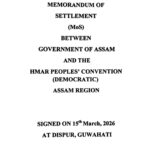
Assam’s latest Hmar Peace Accord is about development as much as security
By Robert Lalmalsawm Sungte
In the hills of Assam, where insurgencies have long shaped politics and daily life, the signing of a peace agreement with a relatively small militant group might not attract national headlines. Yet the Memorandum of Settlement signed on March 15 between the Himanta Biswa Sarma-led Government of Assam and the Hmar Peoples’ Convention (Democratic) (HPCD–Assam Region) represents another step in the slow and often complex process of bringing stability to India’s Northeast.
The accord formally ends the insurgent activities of the HPCD in Assam and commits the group to joining the democratic political process. For the Hmar community — an indigenous tribe scattered across parts of Assam’s hill districts and other Northeast states — the agreement promises something many residents say they have sought for decades: recognition, development and a voice in governance.
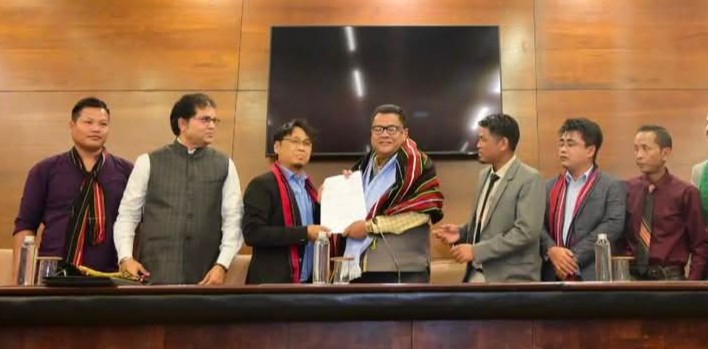
Assam’s Minister for Education and Welfare of Plain Tribes and Backward Classes Ranoj Pegu with Hmar tribe leaders at the signing of the peace deal in Guwahati on March 15, 2026.
While modest in scale compared with some of the region’s larger peace deals, the settlement reflects a broader shift in how governments have approached conflicts in the Northeast — through negotiation, development commitments and political accommodation rather than prolonged military confrontation.
A movement born from marginalisation
The Hmars are a hill tribe with cultural and historical ties extending across Northeast India. In Assam, they are concentrated largely in the hill district of NC Hills (now called Dima Hasao) and in pockets of Cachar and adjoining areas.
Like many hill communities, the Hmars have long complained of isolation and neglect. Poor roads, limited access to healthcare and education, and scarce economic opportunities have reinforced a sense of marginalisation.

Assam Chief Minister Himanta Biswa Sharma with Hmar People’s Conference (Democratic) leaders in Guwahati.
Out of these frustrations emerged the HPCD in the early 2000s. The organisation sought greater administrative recognition and development for Hmar-inhabited areas. Over time, sections of the group adopted an armed strategy, joining the long list of insurgent movements that have periodically troubled the Northeast.
Yet the insurgency remained limited in scale. Unlike some militant groups that controlled large territories or fielded large armed cadres, the HPCD operated on a smaller scale. Its influence was largely confined to specific pockets where the Hmar community resides.
Even so, the presence of an armed group in a region already marked by ethnic complexity added another layer of instability.
A decade-long road to peace
The path to the 2026 agreement began more than a decade earlier. In 2012, the Hmar militants entered into a ceasefire arrangement with the government, suspending armed operations and opening the door to negotiations.
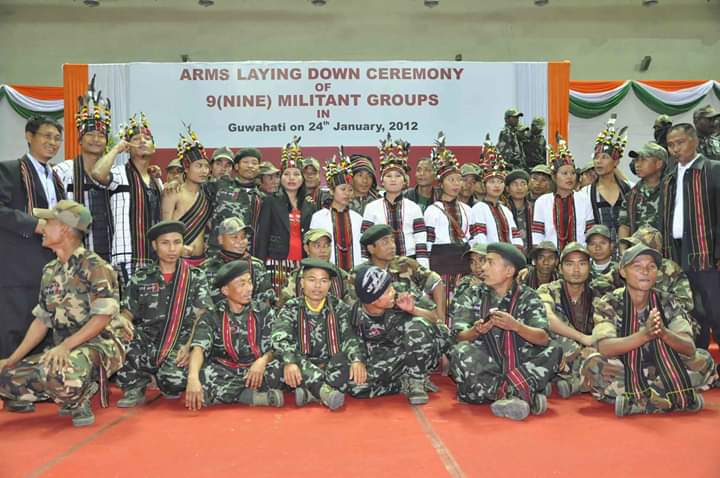
Hmar People’s Conference (Democratic) Assam Region cadres during the arms laying down ceremony in Guwahati in 2012.
Such ceasefire arrangements have become a familiar feature of the Northeast’s conflict landscape. They allow militant groups to retain organisational structures while talks proceed, reducing violence and creating space for dialogue.
For the HPCD, the ceasefire marked a gradual shift from insurgency to political engagement. Negotiations between the group’s leaders and government representatives continued intermittently over the years, addressing questions of administrative representation, development needs and rehabilitation of former militants.
The settlement signed on March 15, 2026, represents the culmination of those talks.
Under the agreement, the HPCD has formally renounced violence and pledged to abide by the Constitution of India. Its leaders are expected to participate in democratic processes and community development initiatives.
Development at the centre
Unlike some earlier peace accords in the Northeast that centred on territorial autonomy, the Hmar peace agreement focuses more heavily on development.
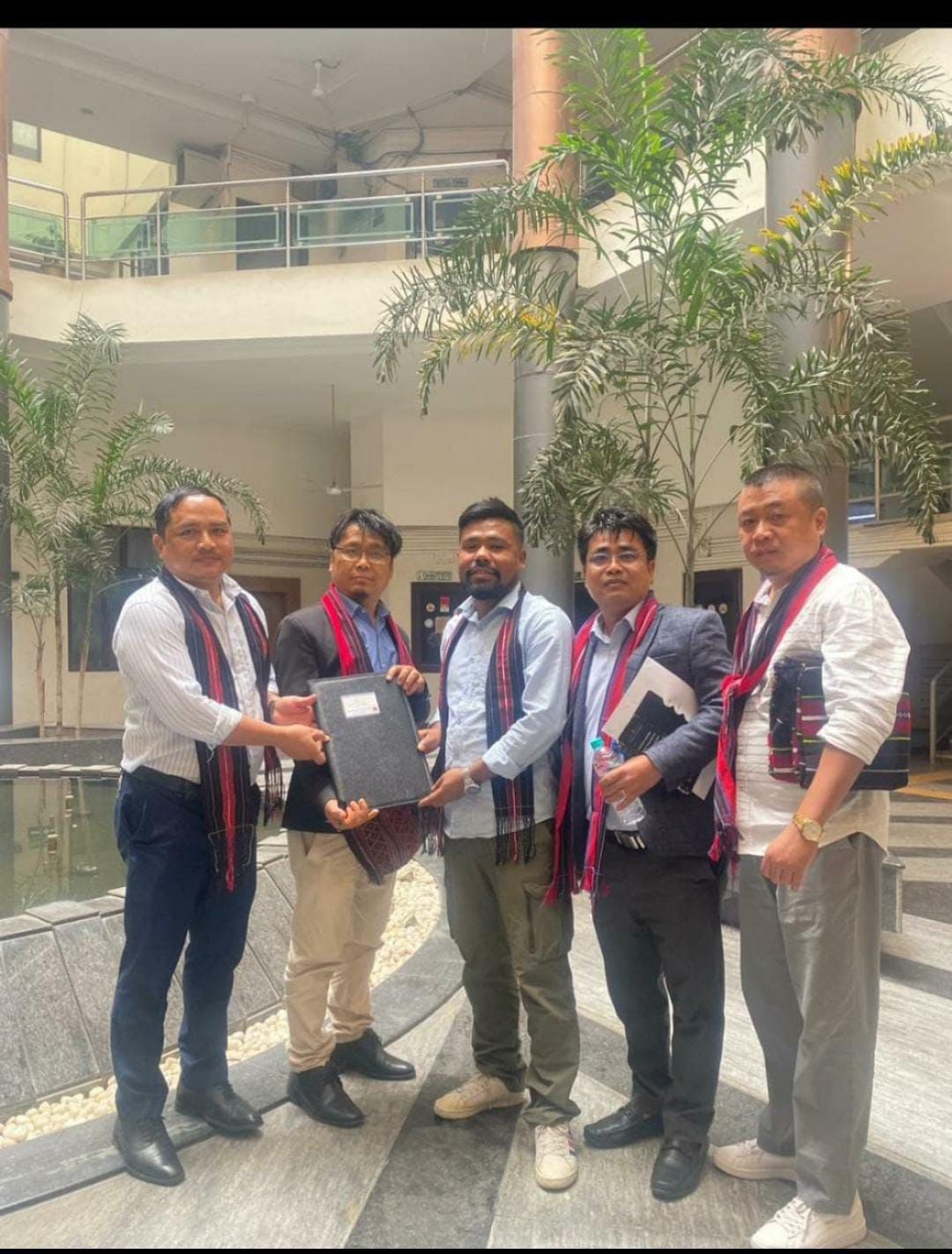
Hmar leaders pose for a photo after the signing of the accord that created Hmar Welfare and Development Council in Guwahati on March 15, 2026.
The settlement outlines plans to improve infrastructure, expand welfare programmes and strengthen administrative attention to Hmar-inhabited areas. While it does not create a new autonomous council or separate administrative unit, it provides for mechanisms through which the community’s concerns can be addressed.
This emphasis reflects a growing recognition that economic neglect has often been a powerful driver of unrest in the region.
For residents of remote hill villages, the promise of development may be more meaningful than complex administrative reforms. Roads that connect villages to markets, schools that allow children to pursue education locally, and healthcare facilities within reach can significantly transform everyday life.
If the commitments in the agreement translate into tangible improvements on the ground, they could help address some of the frustrations that gave rise to the insurgency in the first place.
Part of a larger pattern
The Assam-Hmar accord is the latest in a series of peace agreements aimed at resolving long-running insurgencies across the Northeast.
Over the past decade, governments have sought to dismantle militant networks through a combination of negotiations, economic incentives and political engagement. Smaller insurgent groups have increasingly opted to lay down arms in exchange for development packages and opportunities for political participation.
For Assam, such agreements are particularly important in hill districts where ethnic diversity and competing political aspirations have historically fuelled unrest.
The district of Dima Hasao, where many Hmars live, has witnessed multiple insurgent movements over the years. Reducing the number of armed groups operating in the region can help create conditions more conducive to governance and economic growth.
The challenges ahead
Peace agreements in the Northeast often generate optimism when they are signed. Yet experience shows that their success ultimately depends on implementation.
One challenge will be ensuring that development commitments are delivered in a timely manner. Hill districts often face logistical difficulties that slow the pace of infrastructure projects and welfare programmes.
Another concern involves administrative coordination. Some Hmar-inhabited areas fall within jurisdictions that already have existing governance structures, including autonomous councils. Integrating new mechanisms without creating bureaucratic overlaps will require careful planning.
There is also the question of managing expectations. Communities that have waited years for recognition and development may expect rapid changes. If those expectations are not met, frustration could re-emerge.
A modest but meaningful step
For now, however, the signing of the agreement marks the end of an armed chapter in the history of the Hmar movement in Assam.
For the state government, it represents another step toward reducing insurgency in a region long defined by conflict. For the Hmar community, it offers the possibility that long-standing concerns about development and representation may finally be addressed through peaceful means.
The accord may not transform Assam overnight. But in the quiet calculus of peace-building in the Northeast, even small agreements can carry significant weight.
Each insurgent group that lays down arms reduces the complexity of the region’s conflicts and opens space for a different future — one shaped less by militancy and more by the slow work of development and democratic politics.

Recent Comments