





What a Zoram-oriented political strategy can and cannot do for the Hmars of Manipur
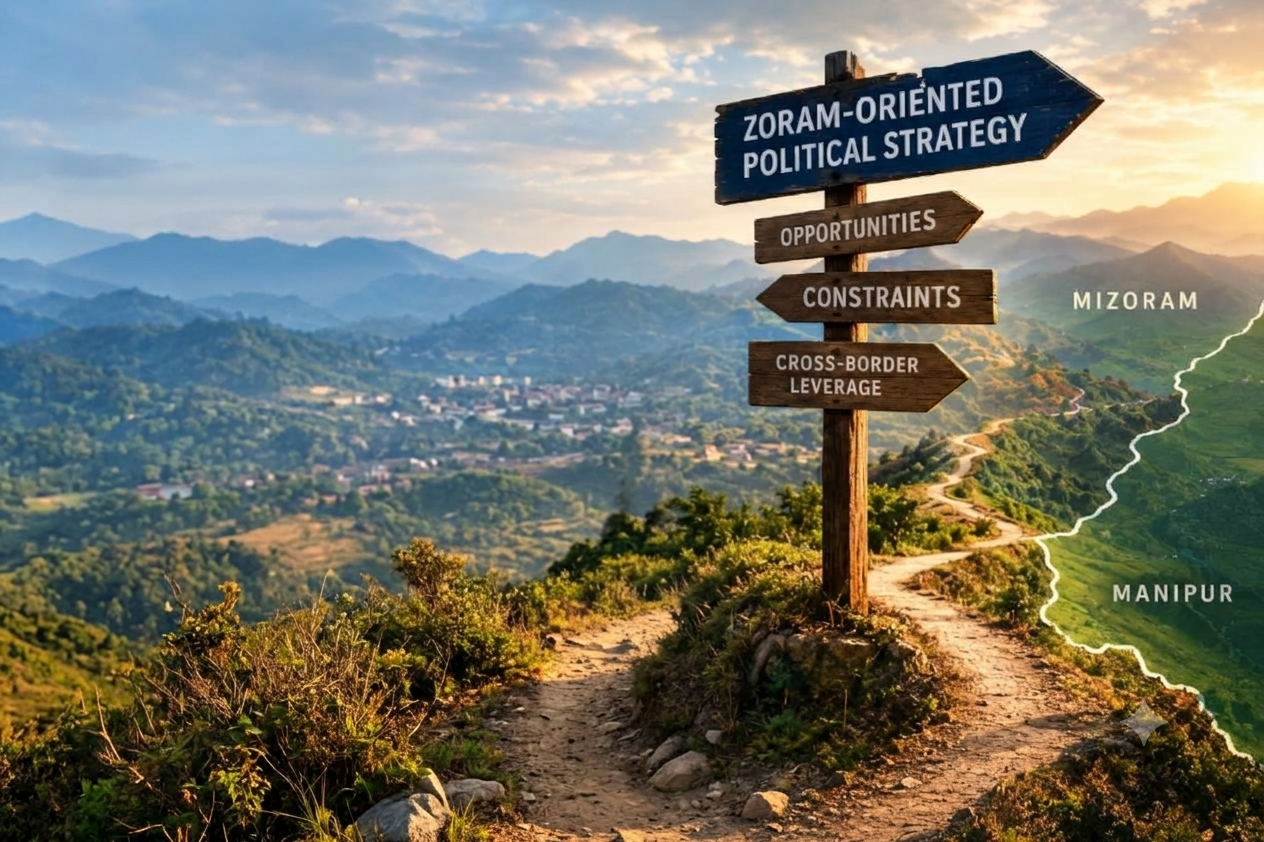
A Zoram-oriented political strategy could strengthen collective representation and bargaining power for the Hmar tribe — but this is a possibility to be tested, not a certainty to be assumed. The case deserves a hard look.
1. A shared political and cultural inheritance
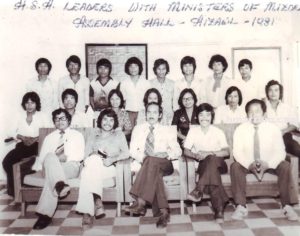
Mizoram is not foreign ground for the Hmars. The community has institutional and political roots running deep into the state’s own founding — Hmar Mizos were the first to settle in the state and were among the principal builders of modern Mizoram, present from the Mizo Union days onward. This is not a relationship to be built from scratch; it already exists in the political memory of the region.
2. A live political channel, not just a historical one
This connection is not just a matter of history. The Hmar People’s Convention (HPC) is aligned with Mizoram’s ruling Zoram People’s Movement, and that gives the community a live route into Zoram politics. Hmar leaders also hold real power in Aizawl, with several cabinet ministers and senior politicians drawn from the tribe. The tie is both functional and well placed.
3. The promise — and the limits — of a “Zoram” framework
A Zoram-oriented approach holds out the possibility of a political framework linking all Mizo peoples, Hmar communities included, across the Mizoram–Manipur boundary. But this is where the idea gets complicated, not simple. Hmar communities in Manipur have their own local interests, their own political institutions, and their own web of relationships — none of which can simply be folded into Mizoram’s politics without friction. A pan-Zoram vision has to reckon with this, not paper over it.
4. Why a Manipur unit of the MNF or ZPM could change the calculus
a) Beyond informal alignment, there is a more direct instrument available: The Hmars in Manipur opening or joining formal state units of the Mizo National Front (MNF) or the Zoram People’s Movement (ZPM) within Manipur itself. This is a qualitatively different move from the HPC’s current association with the ZPM in Mizoram, and it could strengthen Hmar political standing in several concrete ways.
b) A ready-made organisational machine. Both the MNF and ZPM are established, cadre-based parties with decades of political experience (in the MNF’s case) or a proven capacity to unseat an incumbent (in the ZPM’s case, having defeated the MNF itself in 2023). A Manipur unit would not be building a party from scratch — it would be plugging Hmar political energy into structures that already know how to organise, campaign, and govern.
c) Cross-border bargaining leverage. A Hmar-led MNF or ZPM unit contesting seats in Manipur creates a political actor that exists simultaneously inside two states’ party systems. That gives Hmar leaders a seat at the table in Aizawl’s political calculations — no Mizoram-based party can afford to ignore how its Manipur unit is treated — while also giving them a distinct organisational identity to negotiate with in Imphal, separate from the Kuki-Zo umbrella groups they currently operate within.
d) A hedge against being absorbed into larger Kuki-Zo formations. At present, Hmar political interests in Manipur are often expressed through broader Kuki-Zomi coalitions, where Hmar concerns can be diluted among larger and more numerous constituent groups. A distinct MNF or ZPM presence would give the Hmars an independent political vehicle, reducing dependence on being a minority voice within a bigger tent.
e) Symbolic and psychological weight. Contesting under the same banner that governs Mizoram sends an unambiguous signal — to Imphal, to Delhi, and to Aizawl — that the Hmars see themselves as part of a wider Mizo political nation, not merely as one more tribe negotiating for space within Manipur’s ethnic mosaic. That framing itself has bargaining value, even before a single seat is won.
f) The risk side of the ledger. This strategy is not without cost. It could be read by the Manipur state government and by Meitei political opinion as an act of secessionist sympathy or external alignment, potentially hardening positions rather than softening them. It could also strain relations with Kuki-Zo allies who might see it as the Hmars stepping outside the collective Zo political project in Manipur. Any move in this direction would need to be calibrated carefully — perhaps beginning with electoral cooperation or seat-sharing arrangements rather than a full organisational merger — precisely the kind of institutional safeguard the 1986 Accord’s aftermath shows is necessary.
5. Manipur is not optional — it is where the stakes are decided
For Hmars living in Manipur, the issues that matter most day to day — territorial administration, political representation, land rights, security, rehabilitation, development, and the relationship with the majority Meitei community — must still be resolved within Manipur’s own constitutional and political framework, and with the Union government. A Zoram-oriented posture does not replace this; if anything, it could strengthen the Hmars’ hand in these negotiations in the years ahead, precisely because of geography. Areas like Pherzawl district, sitting directly on the Mizoram border, give the community a strategic position that a Zoram alignment could leverage — but only as added weight in the Manipur conversation, not a substitute for it.
6. A history that should temper expectations
The 1986 Mizo Accord is the cautionary precedent here. It ended the Mizo National Front insurgency and delivered statehood — but Hmar groups in southern Manipur and northeastern Mizoram came away feeling their interests had been left out of the settlement. The lesson is not that pan-Mizo solidarity is worthless; it’s that it isn’t self-executing. Any broader Zoram political project needs explicit institutional safeguards for its constituent communities — shared identity alone won’t secure them. It is worth remembering that today’s Sinlung Hills Council did not arrive as a gift of that solidarity; it was won through years of struggle by the HPC(D) rebel movement.
The real question
So the question isn’t “Can Zoram politics be better?” It’s sharper than that: Can a Zoram political framework give Hmar communities greater political leverage while still preserving their distinct interests and securing meaningful constitutional arrangements within Manipur?
That question opens onto three competing paths forward:
i) Stronger, larger Kuki-Zomi-Hmar autonomy within Manipur — building leverage from inside the state’s own political structure.
ii) Closer political alignment with Mizoram/Zoram politics — leaning into the shared Mizo political identity and its cross-border institutional links, whether through informal channels like the HPC-ZPM relationship or more formal steps like a Manipur unit of the MNF or ZPM.
iii) A negotiated arrangement involving the majority Meiteis and the Hmars — seeking accommodation directly with Manipur’s dominant political community.
These paths are not mutually exclusive.
The Hmars of Manipur are unlikely to choose one and abandon the others. A realistic strategy would draw on all three: staying anchored in the Kuki-Zomi-Hmar political space, building a Zoram connection that adds weight without replacing Manipur-based representation, and keeping a direct line of dialogue open with the Meiteis. The real question is sequencing and emphasis, meaning which relationship is treated as the foundation and which as the lever.
A Zoram-oriented approach has a distinct advantage in one respect. It is the only option that adds to the Hmars’ bargaining position without taking anything away from the other two. The HPC’s tie to the ZPM, the strong Hmar presence in Mizoram’s leadership, and the strategic location of Pherzawl on the Mizoram border are assets that already exist. Their value, however, depends on whether someone can turn them into political strength.
That brings the argument back to leadership. Strategy alone will not do it. Movements and alignments need people who can carry them: leaders credible in Manipur, trusted in Aizawl, and able to explain to wary allies and sceptical neighbours that a Zoram orientation is a way of adding strength, not of leaving anyone behind. Such a leader would have to hold the community’s distinct interests together with the wider Mizo political world, drawing on the lessons of the 1986 Accord and the long struggle that produced the Sinlung Hills Council.
So the final question is not only which path the Hmars should take, but also whether Manipur’s Hmars can produce a leader, or a generation of leaders, willing to invest in Zoram-oriented politics for the long haul. Without such leadership, the opportunity will remain an idea. With it, geography, history and existing political ties could finally be turned into leverage.

Recent Comments