






Barak Valley Hill Tribes Development Council: Nearly 30 Years On, A Council Still Searching for Its Purpose
The Barak Valley Hill Tribes Development Council shows how recognition without power can stall progress
For nearly three decades, the Barak Valley Hill Tribes Development Council has stood as a symbol of both achievement and unfinished work in southern Assam. Created in 1996 after years of mobilisation by hill tribal communities — especially the Hmar people — the council was meant to correct a long-standing imbalance. Tribes living in the hills of the Barak Valley had watched as other regions of Assam received autonomy and development structures that never quite reached them.
The council was the compromise that emerged from that history: recognition, but not autonomy; a platform, but limited authority.
To understand why the council still matters, it is important to remember how it began. The demand for a development body in the Barak Valley did not come from bureaucratic planning in Guwahati. It came from the hills—villages that felt cut off from infrastructure, education and political representation. Hmar organisations played a major role in shaping that demand and sustaining it until the state government responded.
When the council was finally formed, expectations were high. For the Hmar community in particular, it was more than an administrative body; it was a recognition of their presence in the political landscape of the Barak Valley.
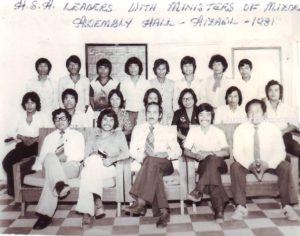
Leadership reflected that origin. The council’s early direction was shaped by its first Executive Member, Pu Sunthang Hmar. His tenure symbolised the transition from movement to governance—a moment when activists and community leaders attempted to turn long-standing demands into practical development planning.
Nearly thirty years later, the council continues under leaders emerging from the same community tradition, including the current leadership of Lalthawmlien Hmar. That continuity says something important: the council has remained closely tied to the Hmar political experience in the region.
But symbolism alone does not build roads, schools or livelihoods.
Over the years, the council has succeeded in one key respect: it kept the concerns of hill tribes in the Barak Valley visible. Without it, many of these issues might have remained buried within district-level bureaucracy. The council has served as a reminder that development in Assam is uneven not only between districts but within them.
Yet visibility is not the same as power.
Unlike the autonomous councils that govern large tribal regions elsewhere in Assam, the Barak Valley Hill Tribes Development Council has always operated with limited authority. It can recommend, advocate and coordinate—but it cannot legislate or administer territory in the way stronger institutions can. That limitation has shaped its record. Some initiatives have been proposed, surveys conducted and issues raised, but large-scale transformation has been harder to achieve.
Critics often point to internal disputes, administrative weaknesses and irregular funding as reasons the council has not fulfilled its early promise. Those criticisms are not entirely unfair. Like many institutions born from political compromise, the council has sometimes struggled to define its role.
But the deeper problem may lie elsewhere: the structure itself.
Assam has created many Development Councils over the years, often as a way to recognise communities without altering the larger administrative framework. These councils acknowledge identity, but they do not always provide the tools necessary to drive sustained development. In that sense, the Barak Valley Hill Tribes Development Council reflects a broader pattern in the state’s governance approach.
Still, dismissing the council would ignore the history that produced it. For the Hmar community, the council is not just an office or a committee. It is the outcome of years of organising, negotiation and persistence.
And that matters.
The question now is whether recognition will eventually lead to stronger institutional support—or whether the council will remain what it has largely been for nearly three decades: a reminder of a promise only partly kept.
Institutions like the Barak Valley Hill Tribes Development Council reveal something important about governance in diverse regions. Communities often begin by asking to be heard. Eventually, they ask for something more difficult: the power to shape their own development.
The council’s history shows that the first demand was answered. The second remains unresolved.

Recent Comments